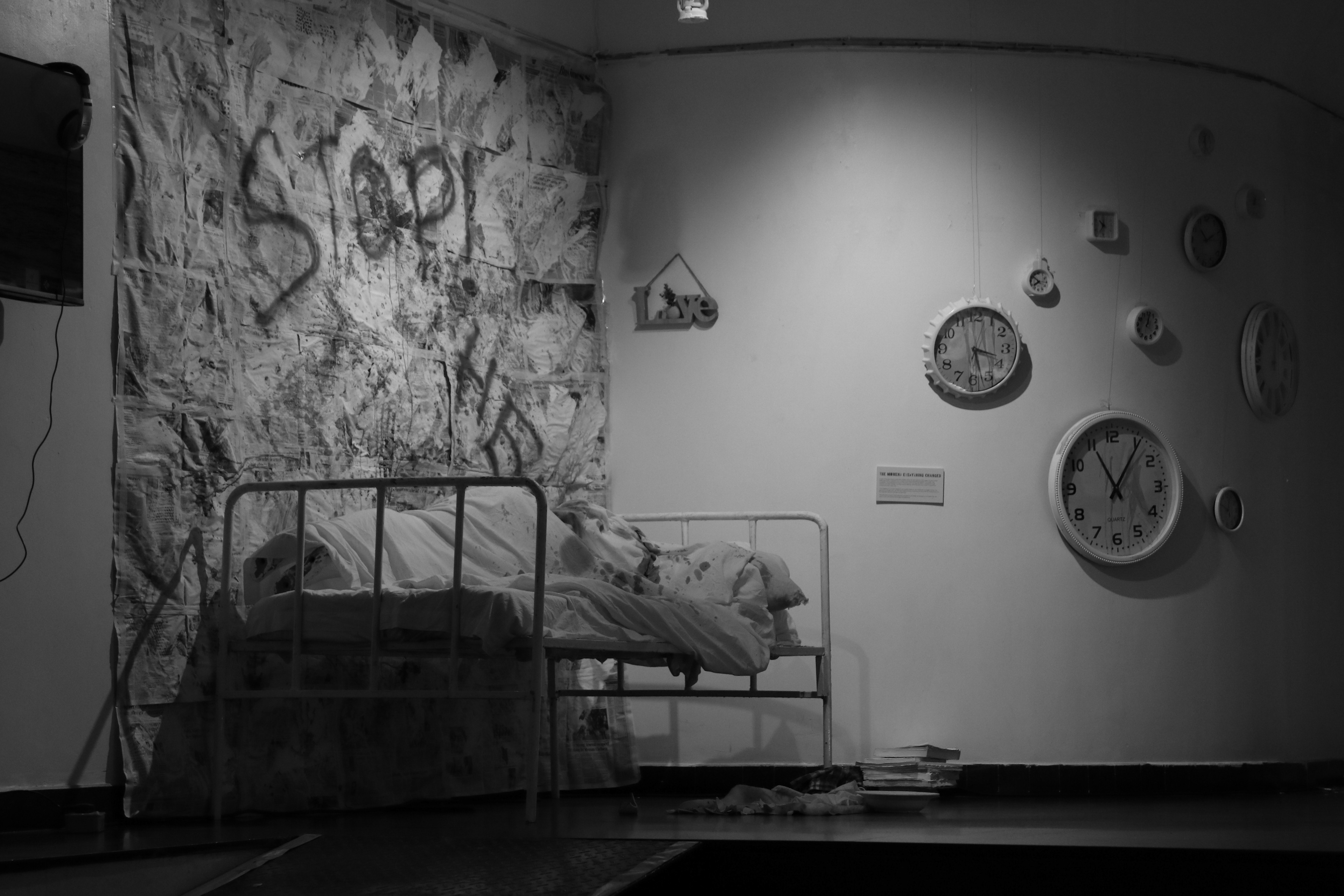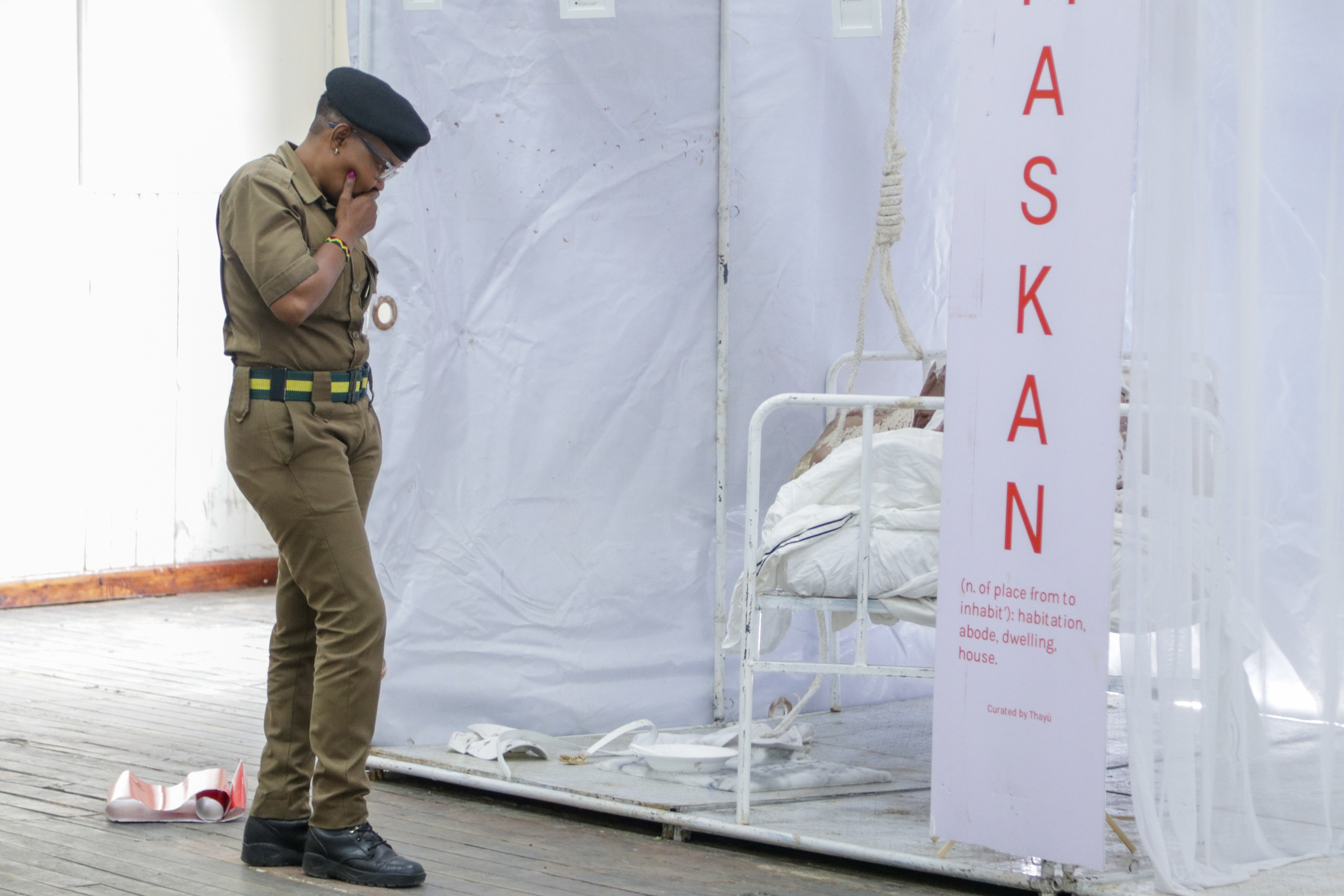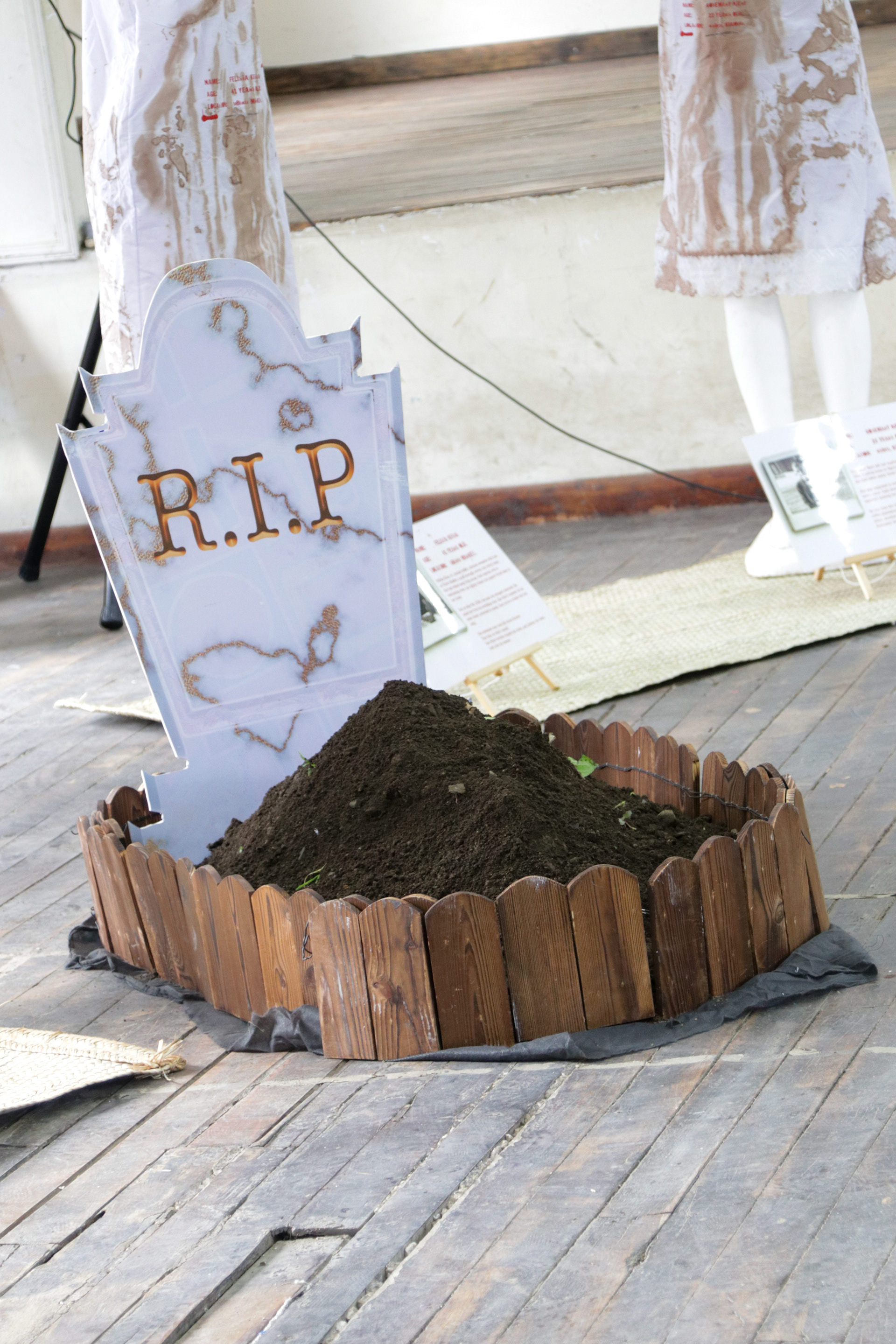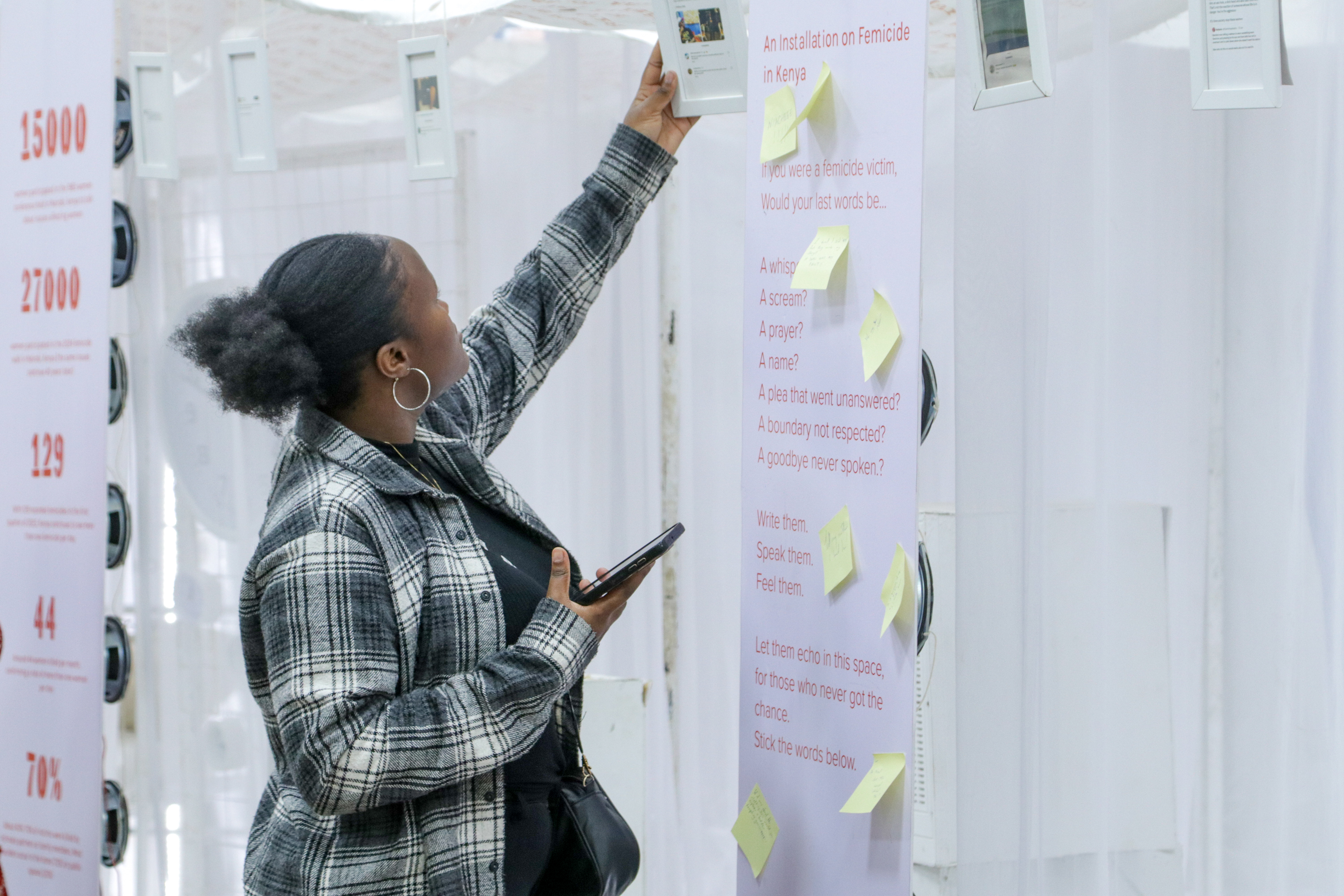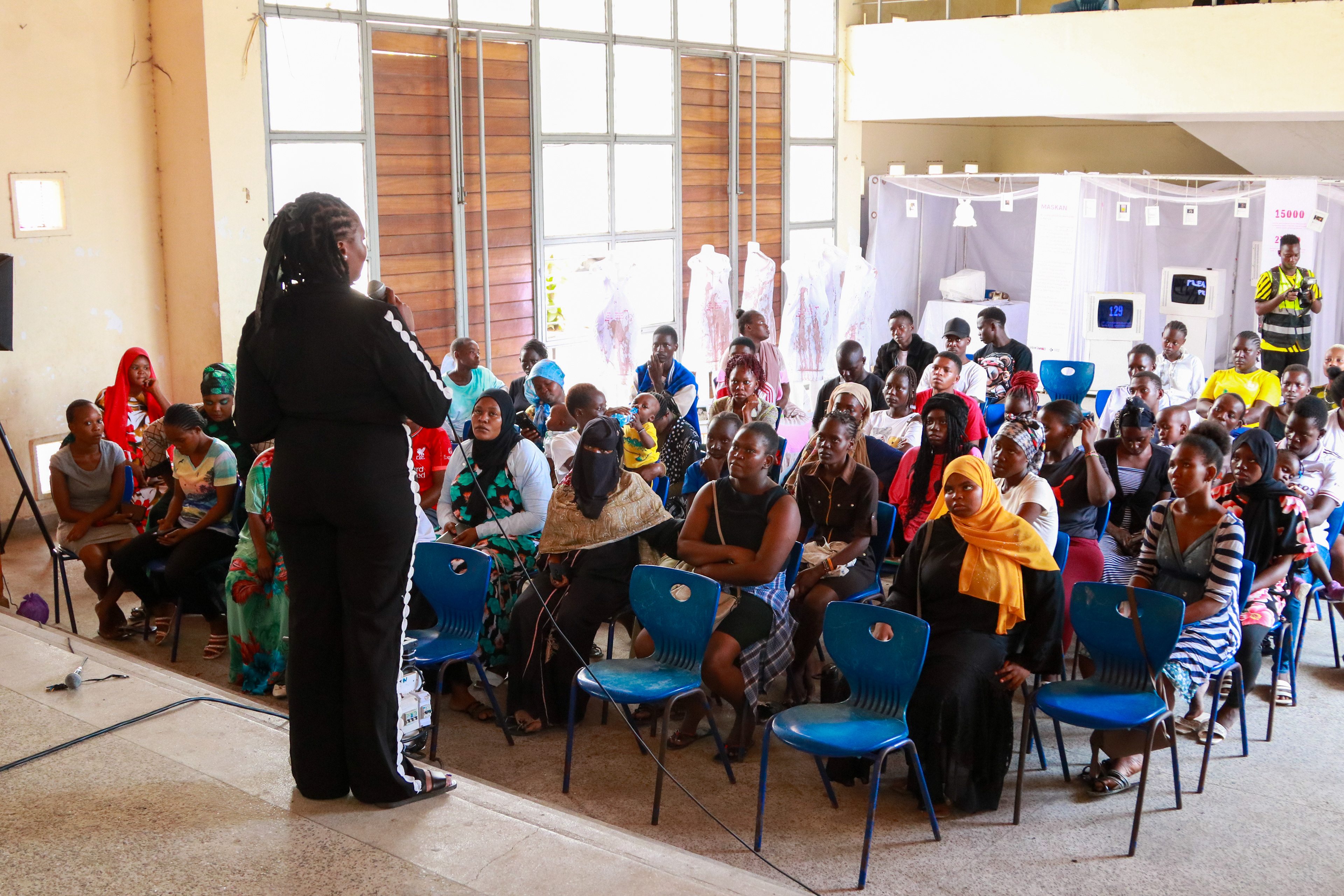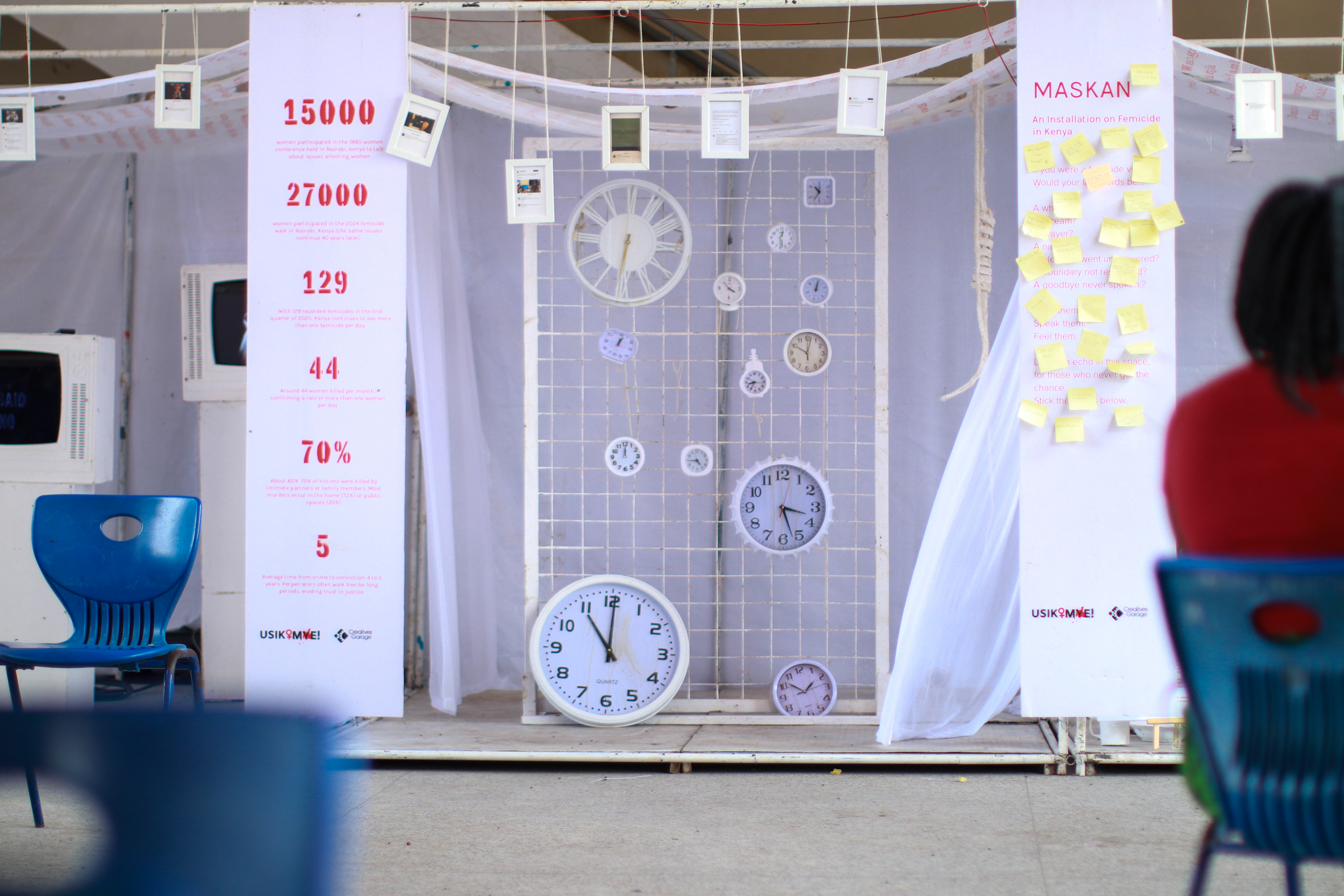
MASKAN, from the Swahili word for home or dwelling, was once a symbol of refuge, warmth, and safety. Today, in too many Kenyan households, maskan has become a place of violence, even death. The installation invites audiences to step inside this painful contradiction, offering an unflinching look at the lives of women and girls lost to femicide.
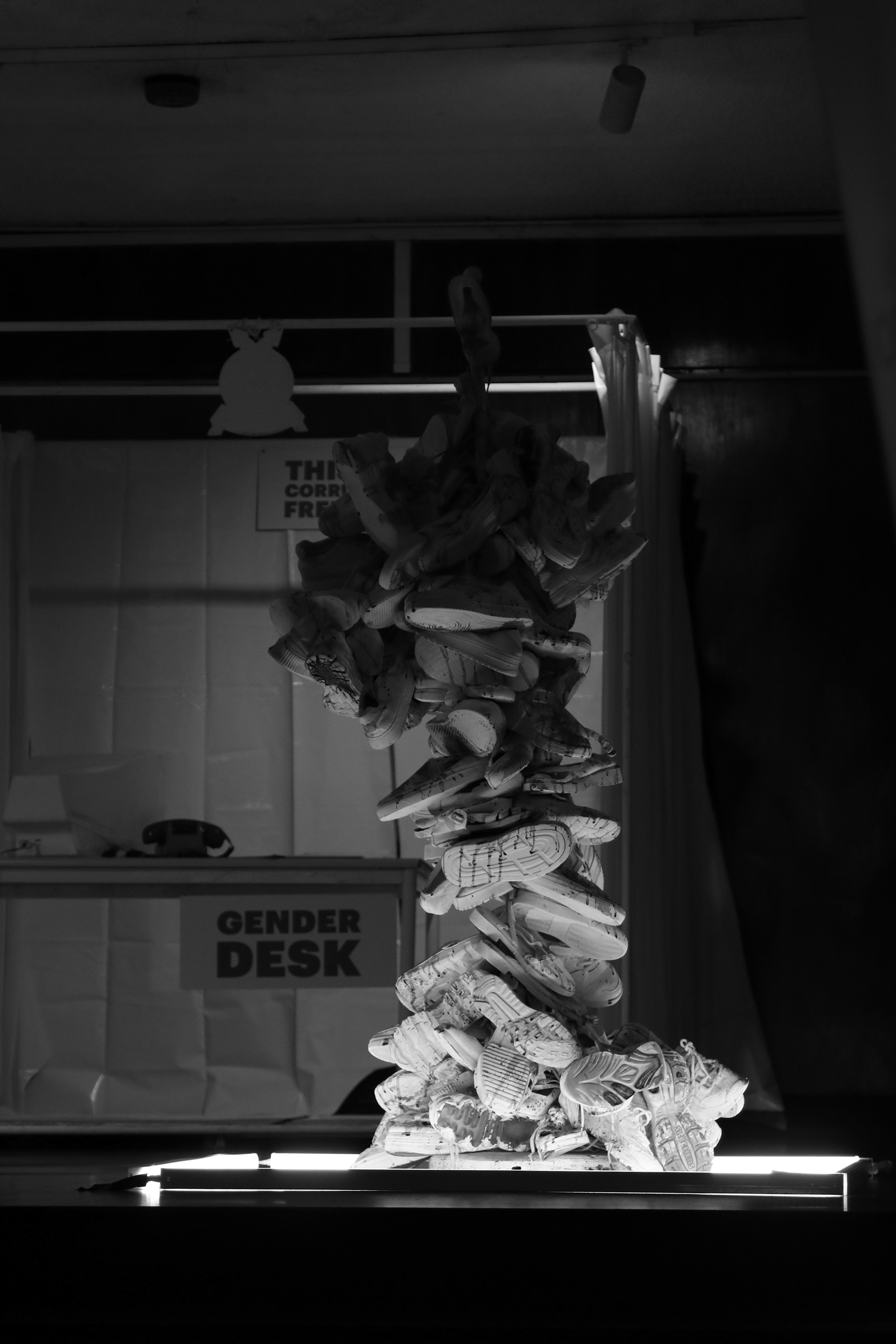
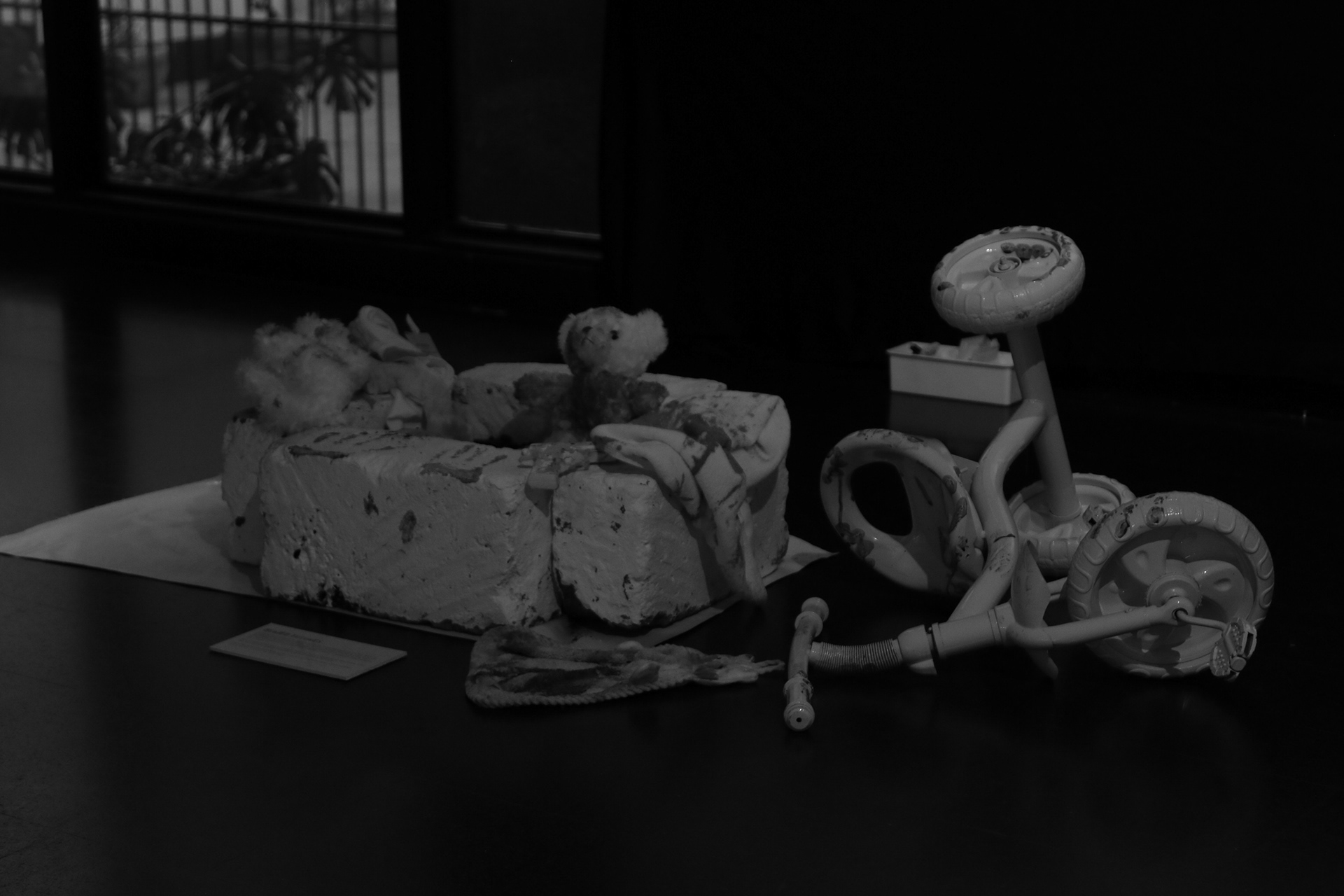
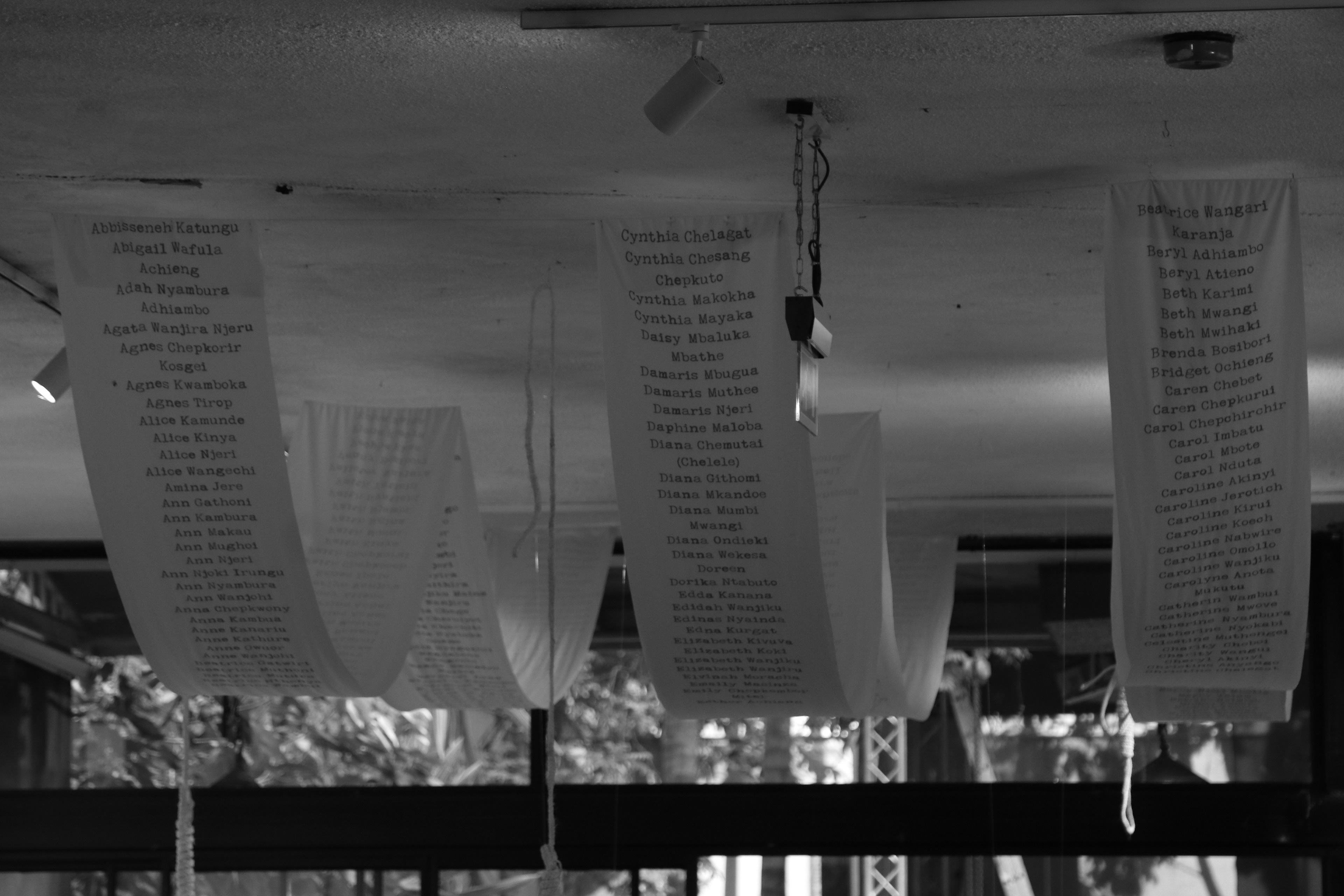
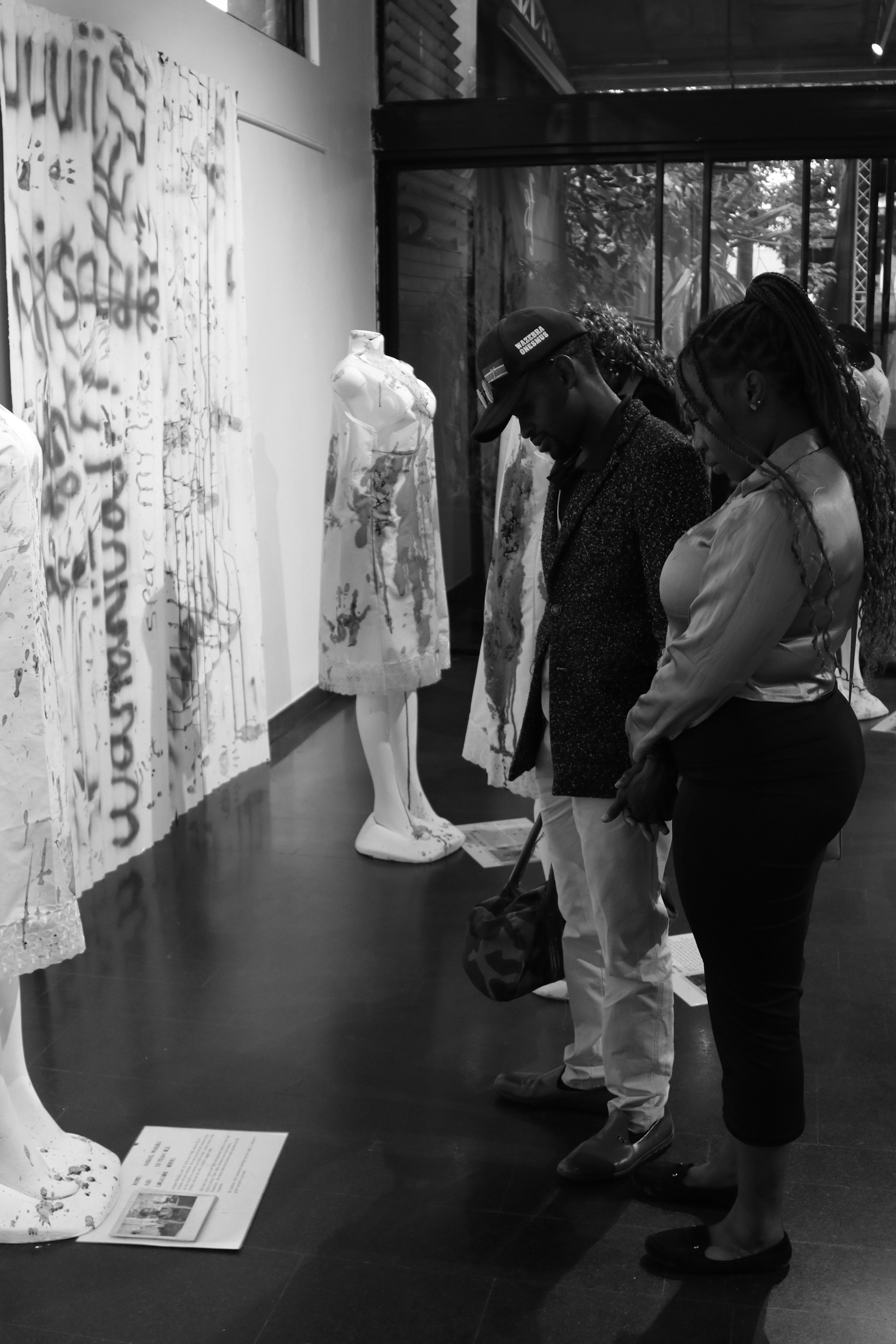
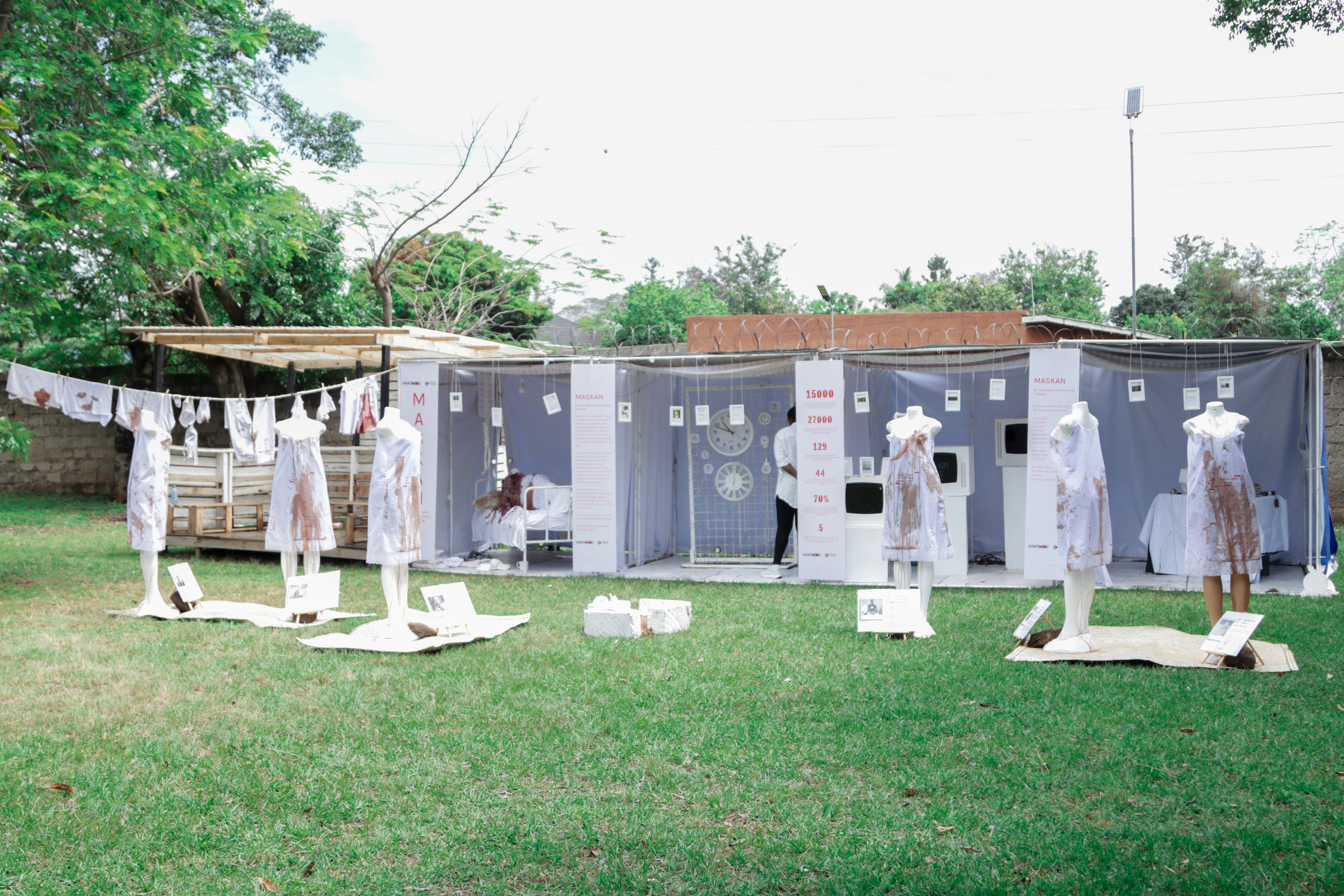
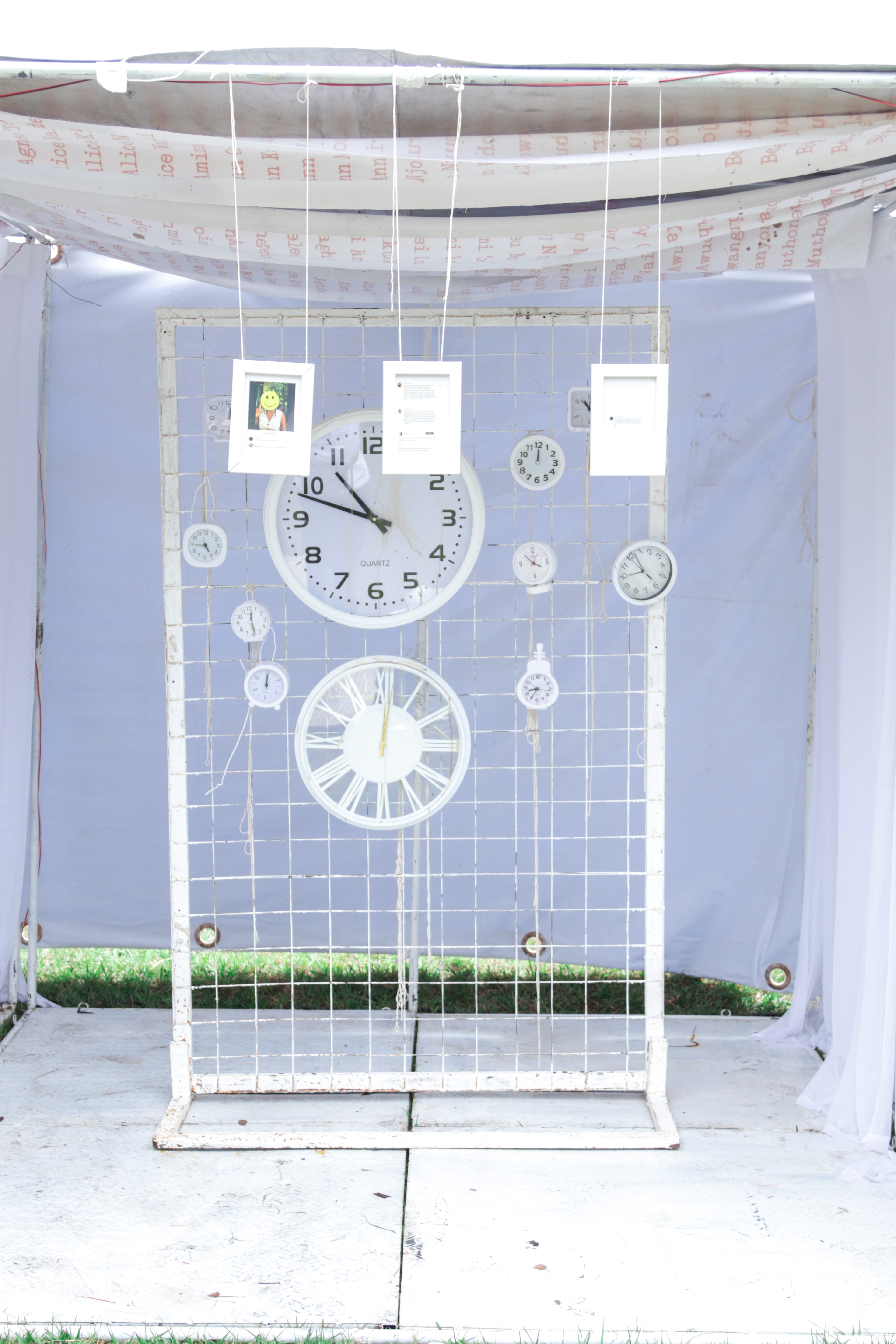
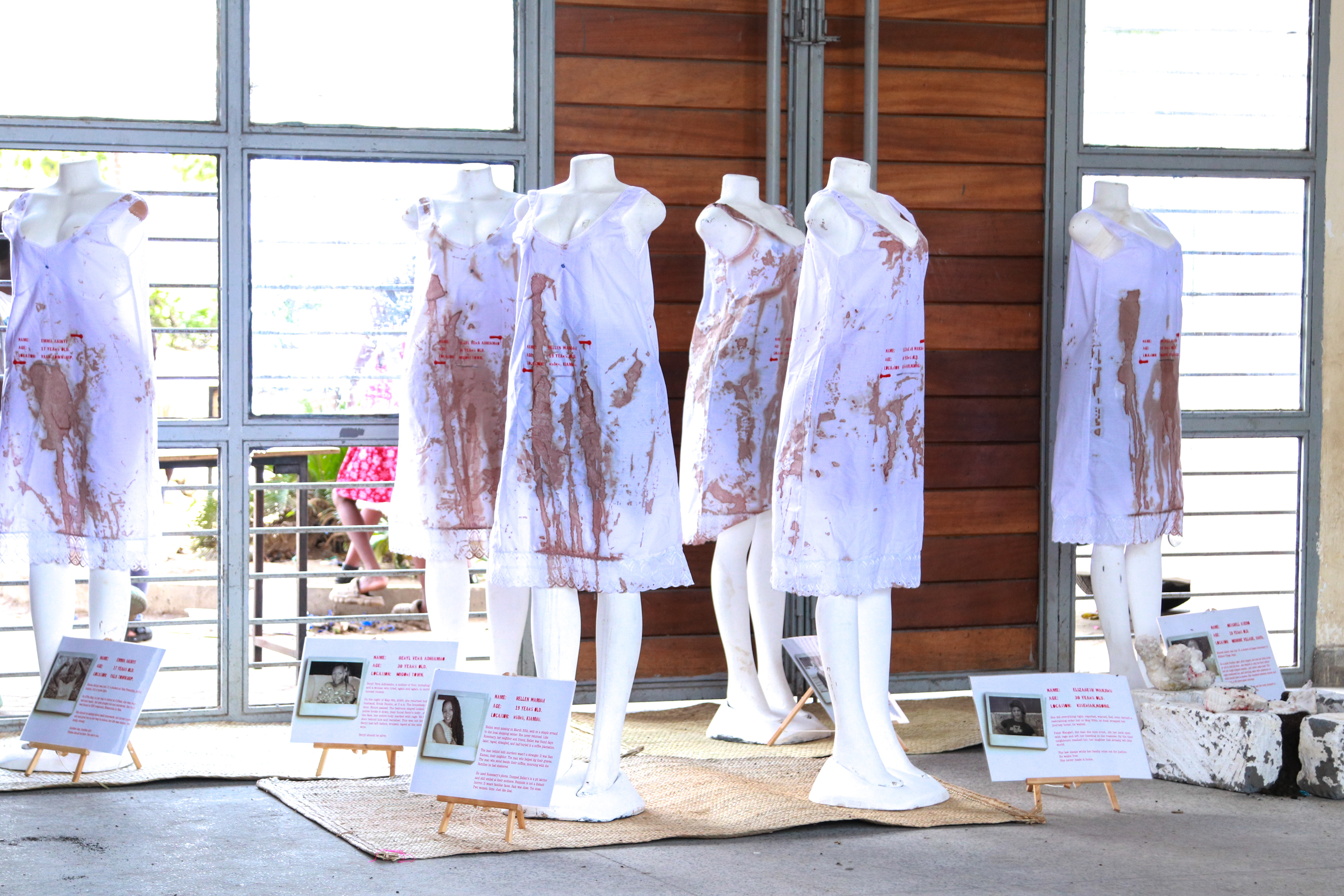
Curated by award-winning multidisciplinary artist Thayù, MASKAN uses sight, sound, scent, and spatial storytelling to evoke memory, mourning, and rage. The installation features re-enacted clothing and shoes representing the victims, haunting soundscapes of grief, powerful artworks by Mika Obanda, and a map of Kenya marked with the locations where femicide has occurred. Text messages that were never received, videos of loved ones left behind, and a 100,000-name protest scarf wrap around the space, each element serving as a testimony to lives cut short and a community that refuses to forget.
Artist Statement
Maskan began with a question: What happens when home, the one place meant to hold and protect you, becomes the very site of your erasure?
In Swahili, MASKAN means home. In Arabic, it shares roots with stillness, rest, and habitation. Today, Kenya, home has become dangerous terrain for far too many women and girls. Behind closed doors, within familiar walls, safety slips away. Lives are taken and silence lingers longer than it should. This work is a refusal to look away.
As an artist, I am drawn to memory, not the sanitized kind, but the messy, raw kind. The kind that lives in fabric, in smell, in silence, in half-sent texts and grieving mothers’ wails. MASKAN is built from that memory. It’s a house haunted not by names we once knew.
I wanted to humanize the women we’ve lost. To remind us that they were here; wearing clothes, sending messages, making dinner, loving people, dreaming about tomorrow. I wanted to hold space for those who remain, carrying unbearable grief and unheard rage.
Thayù
Curator, MASKAN