
Unfold Conversations is your quarterly reality check (with snacks!) in a world where AI can sketch your face, remix your beats, and argue like your ex. It’s no longer science fiction, it’s here, it’s fast, and it’s busy flipping every creative table we thought was nailed down.
This is your rare offline moment, possibly the only time AI isn’t eavesdropping. A physical space where artists, makers, digital tinkerers, and curious minds come together to unpack trends, challenge the status quo, and figure out how to ride the AI wave without losing our human touch.
From machine learning tools that zhuzh up your visual designs to neural networks writing your next banger or screenplay, creatives are no longer just competing with tech, they’re in full-blown collab mode. But to truly co-create with machines, you need to know your stuff: the tools, the terms, the tea.
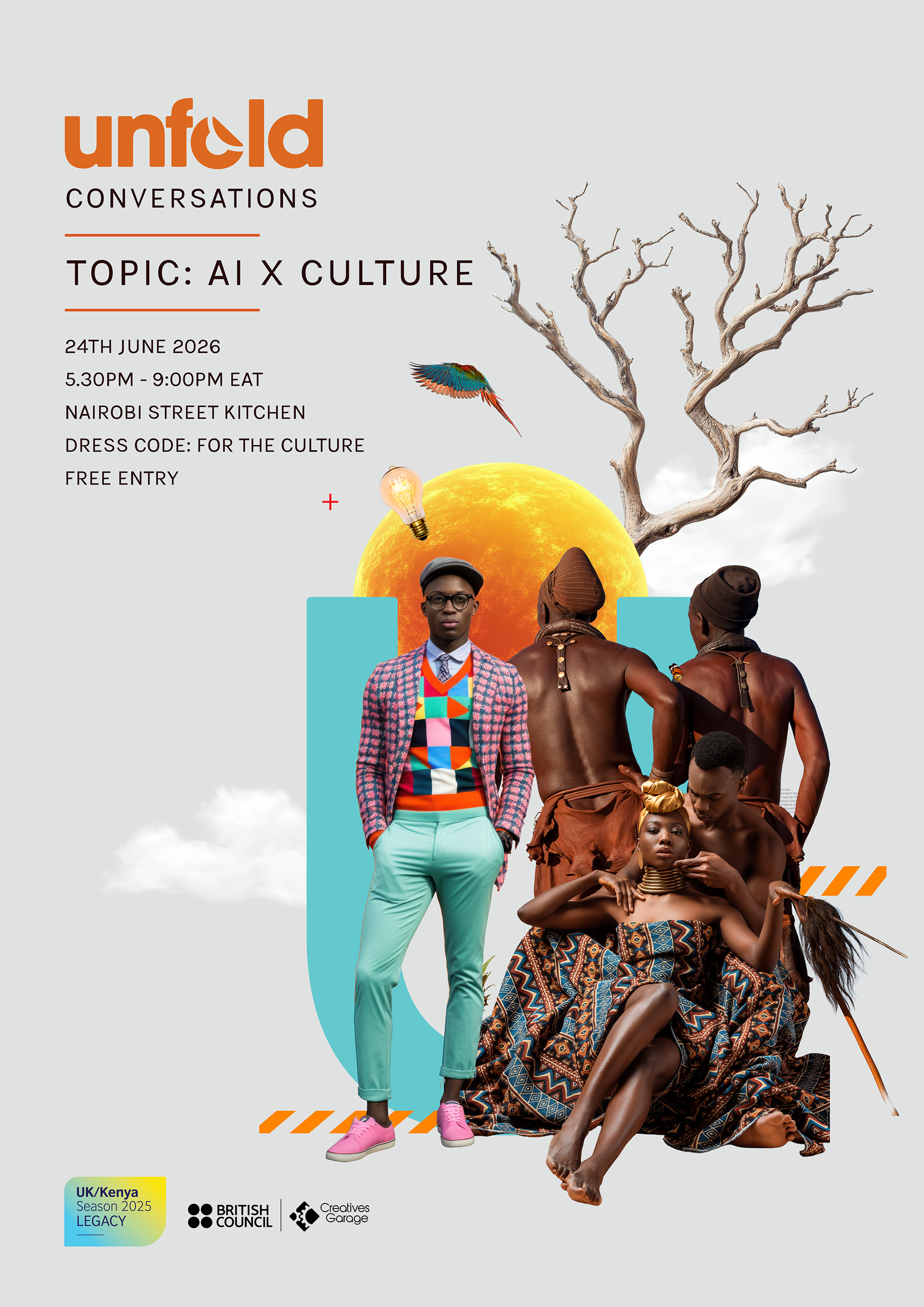
Held at Nairobi Street Kitchen, "Unfold Conversations: AI X Culture" explored the intersection of technology and heritage. The session commenced with a documentary presentation by Emmaus Kimani, detailing his collaborative efforts in digitizing cultural artifacts at the Manchester Museum. This visual showcase provided a vital framework for the subsequent panel discussion moderated by Bukonola Ngobi, featuring insights from Wandiri Karimi, Emmaus Kimani, and Oyinkansola Onwuchekwa. The discourse centered on cultural identity and the dual role of AI as a tool for both heritage conservation and potential cultural erasure. Panelists emphasized that for creatives, mastering AI is essential for maintaining agency over their narratives. During the Q&A, a notable tension emerged among practitioners regarding the risk of professional displacement, reflecting broader industry anxieties. Despite these concerns, the event concluded with a strong consensus on the necessity of continued dialogue. The engagement demonstrated a significant appetite for further exploration into how AI tools can be ethically harnessed to protect and project Kenyan culture in a digital age.
Key Highlights:
Multidisciplinary Discourse: The panel successfully bridged technical AI engineering, intellectual property law, and artistic practice, providing a holistic framework for understanding AI as a "cultural space" rather than merely a technological tool.
Archival & Heritage Focus: Emmaus Kimani’s opening documentary on digitizing Manchester Museum artifacts effectively grounded the discussion in practical applications of technology in heritage conservation.
Emphasis on Data Sovereignty: Panelists, including AI researcher Oyinkansola Onwuchekwa and IP lawyer Wandiri Karimi, advocated for ethical AI systems that prioritize community consent, fair attribution, and the representation of African languages and cultural contexts over Western-centric models.
Industry & Creative Agency: A central theme emerged regarding the necessity of creatives mastering AI tools to maintain agency over their narratives and protect cultural expressions against potential erasure or exploitation.
Authentic Audience Feedback: The Q&A session surfaced genuine tensions regarding professional displacement and industry anxiety, underscoring the need for continued, inclusive dialogue between tech developers and creative communities.
Hybrid Accessibility: The successful execution of a hybrid format (Nairobi Street Kitchen x YouTube) effectively expanded the event's reach, allowing for a broader exchange between local Nairobi-based practitioners and international stakeholders.
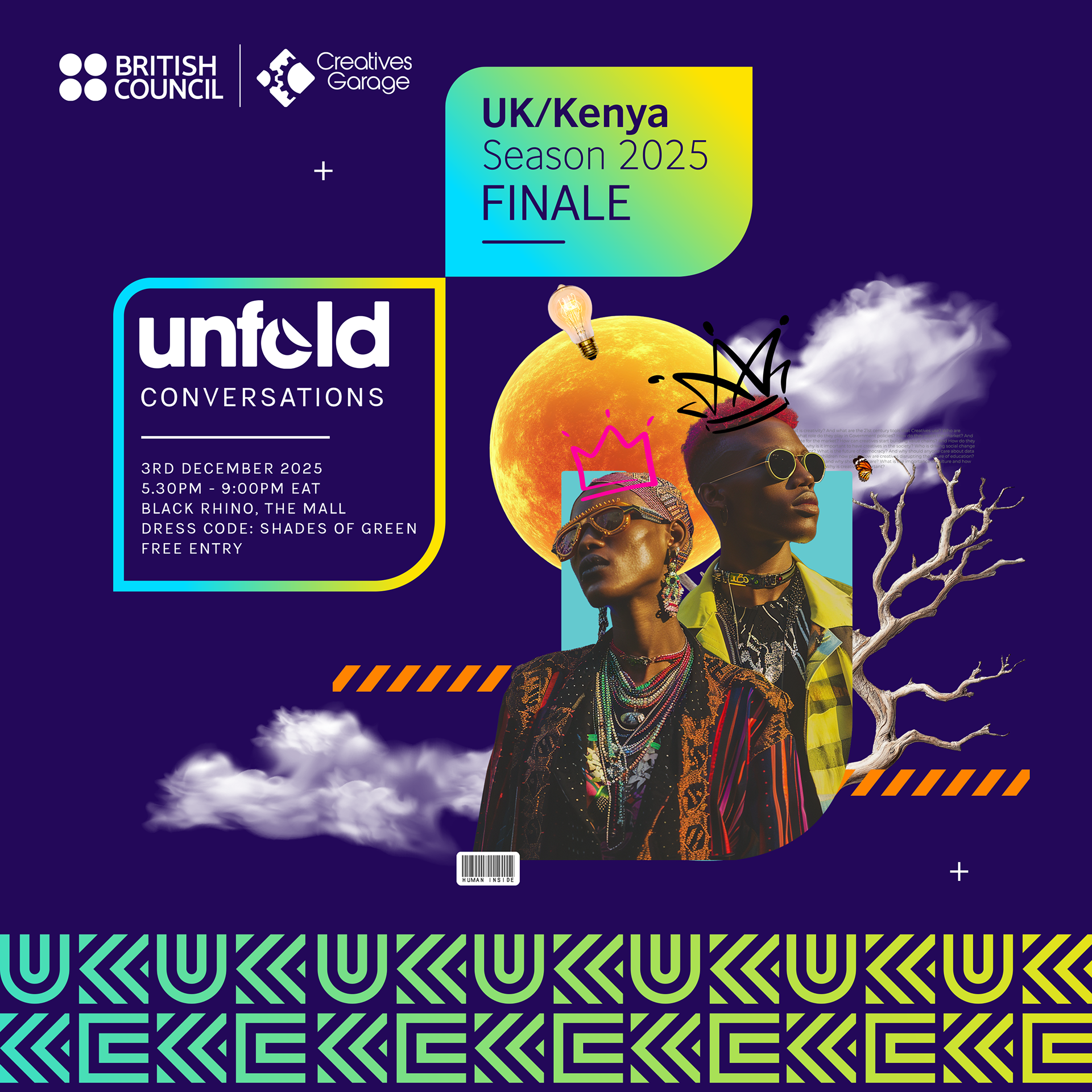

This session explored the transformative role of Artificial Intelligence in the preservation and showcasing of African storytelling traditions. It examined the current cultural landscape, focusing on how AI disrupts traditional power dynamics, empowers storytellers, and offers new opportunities for accountability, while simultaneously addressing the risks of digital colonialism and cultural misappropriation. Through a keynote and panel discussion, experts analyzed the need for ethical AI frameworks, community-based digital literacy, and adaptive policy measures that ensure cultural heritage remains protected while fostering innovation in the digital age.
In-person panel discussion features:
Grace Murugi – AI and Digital Strategist
Sarah Malia – Co-founder and Producer at Freehand Studios & Pungulu Pa Production
Caroline Kimutai - Journalist and digital media strategist
Moderated by Bukonola Ngobi, host of Ongea AI, a Pan-African podcast that delves into AI and AI trends across the globe.
Key Takeaways
The Promotion-Protection Dilemma: There is a critical tension between promoting African cultural stories globally and the risk of "digital colonialism," where AI models scrape cultural data as free research and development without consent or credit.
Beyond Copyright: Traditional intellectual property laws are insufficient for protecting intangible heritage. A "patchwork" of measures—such as community-specific licenses, data governance, and potential levies on AI companies—is necessary to protect artists and communities.
Monitoring Heritage: Governments must move beyond tracking only economic output and begin measuring the health and vibrancy of the intangible cultural heritage sector to monitor the impact of AI on cultural representation.
Community-Led Strategies: Strategies for AI adoption must be community-specific. Different groups have varying needs: some, like mask societies, prioritize secrecy, while others, like basket makers and musicians, seek to use AI to innovate and expand their reach.
Digital Literacy: Developing "critical digital literacy" toolkits is essential for practitioners to make informed decisions about what cultural data to share online versus what must be kept private.
This session explored how AI affects the originality of creative work, examining critical questions of ownership and control. It addressed the inevitability of AI integration in the creative industry, using examples like Suno, ChatGPT, and Claude to analyze its transformative impact on fields such as music creation and design.
Panel:
Alex Gakuru - Technology Rights Defender
Paul Kauku - Human Rights and Development expert
Moderated by:
Bukonola Ngobi - Cultural Producer and Ongea AI Co-creator & Host
Key Highlights:
The Crisis of Originality: Deep analysis of how generative AI challenges traditional notions of authorship and creative integrity.
Ownership & Control: A critical examination of who holds rights to AI-generated content and who dictates the usage parameters of these tools.
Industry Inevitability: Acknowledgement of AI's permanent role in creative workflows, with case studies on tools like Suno, ChatGPT, and Claude.
Practical Application: Discussion on the specific implications of AI adoption in music composition and graphic design.